From Fragmented Tools to an AI-Powered Recruiter Workspace

Business impact
01.
In three weeks, I turned an ambiguous, globally fragmented recruitment tools with an AI proposition into a tangible product experience.
02.
Exposed the complexity behind it, and gave the client enough evidence to decide whether it was worth pursuing.
03.
Informed and influenced further direction and more strategic product development.
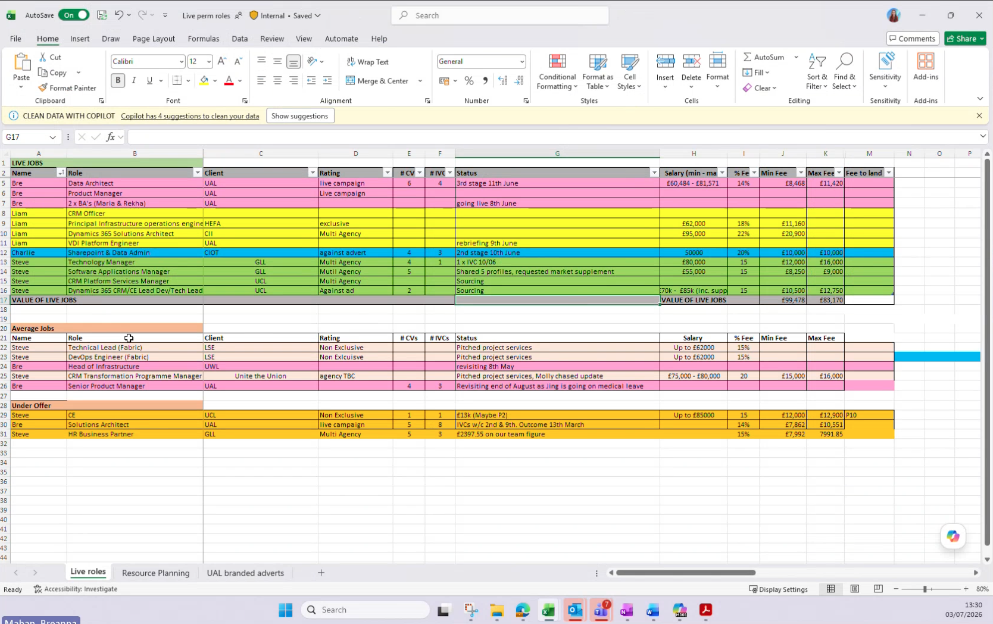
A complex landscape of platforms and tools used in recruitment process.
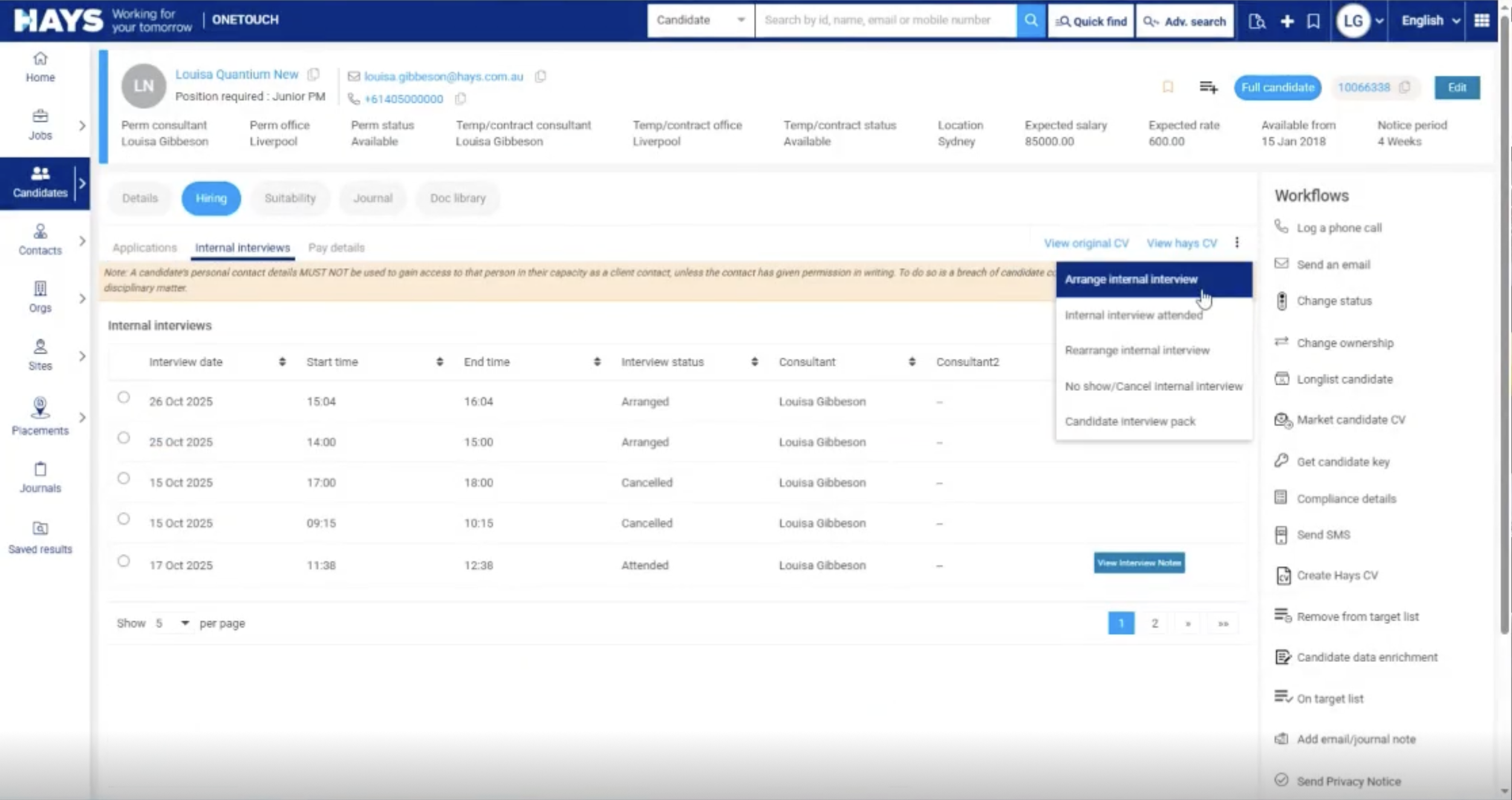
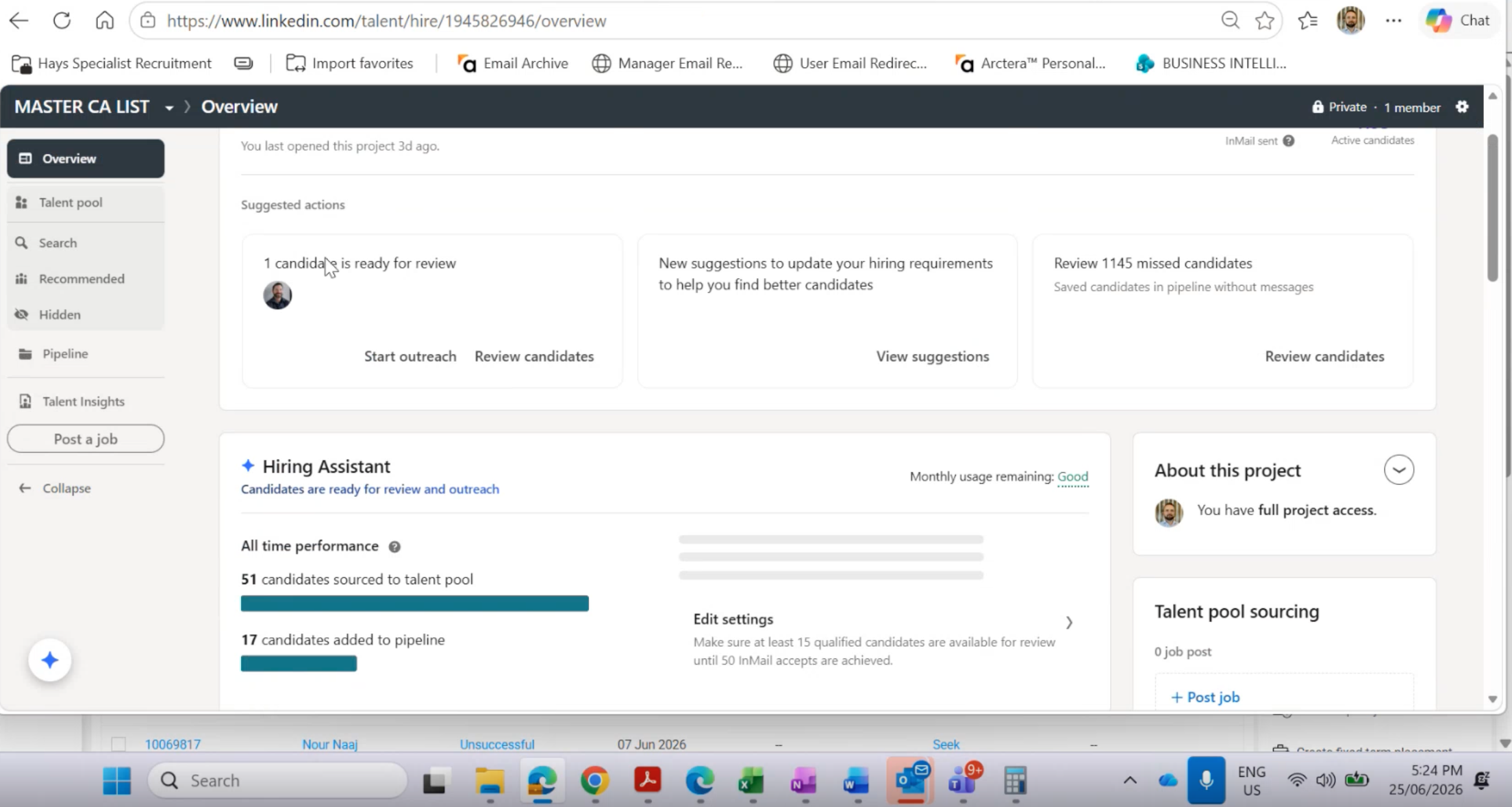
Before
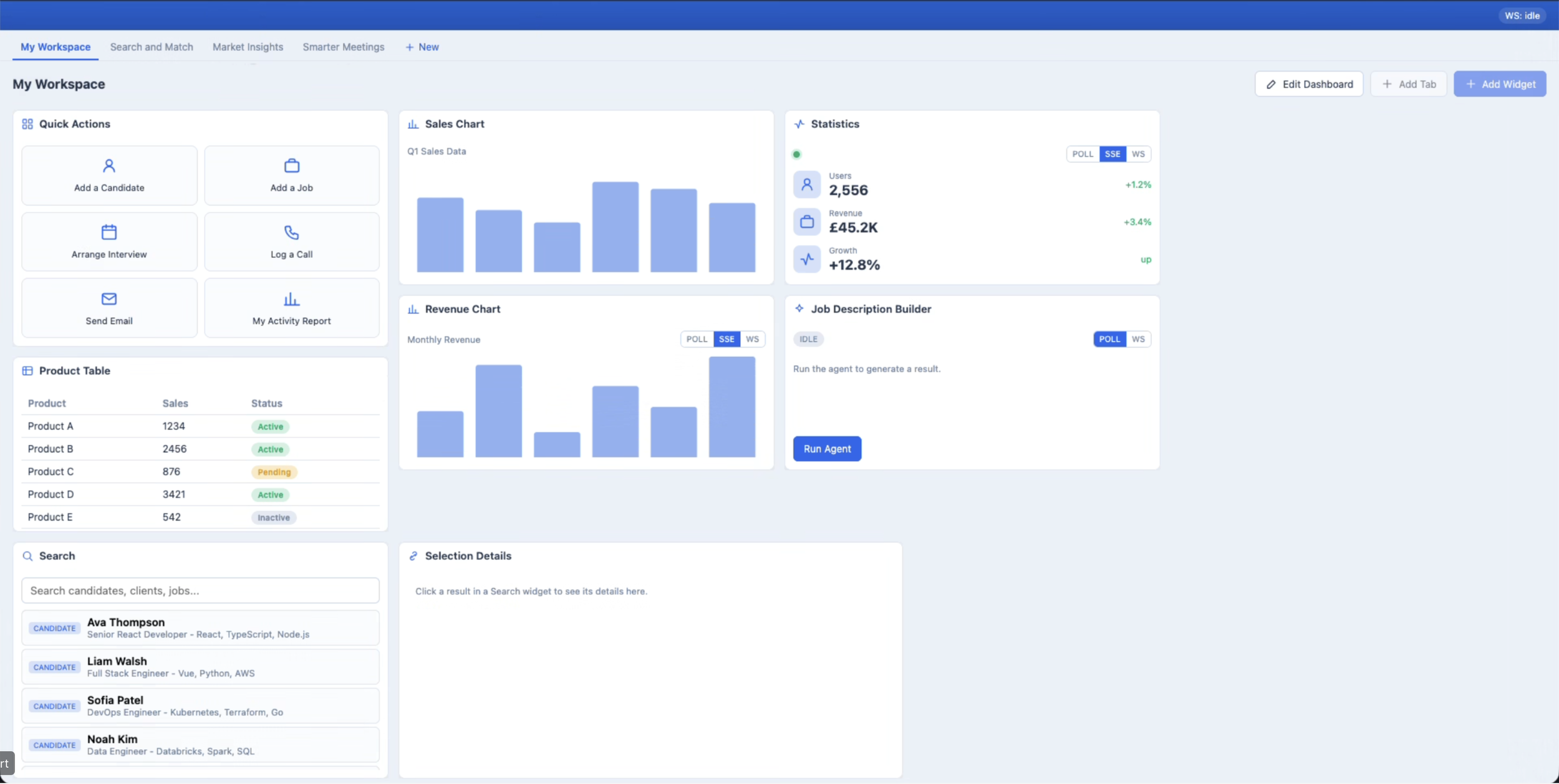
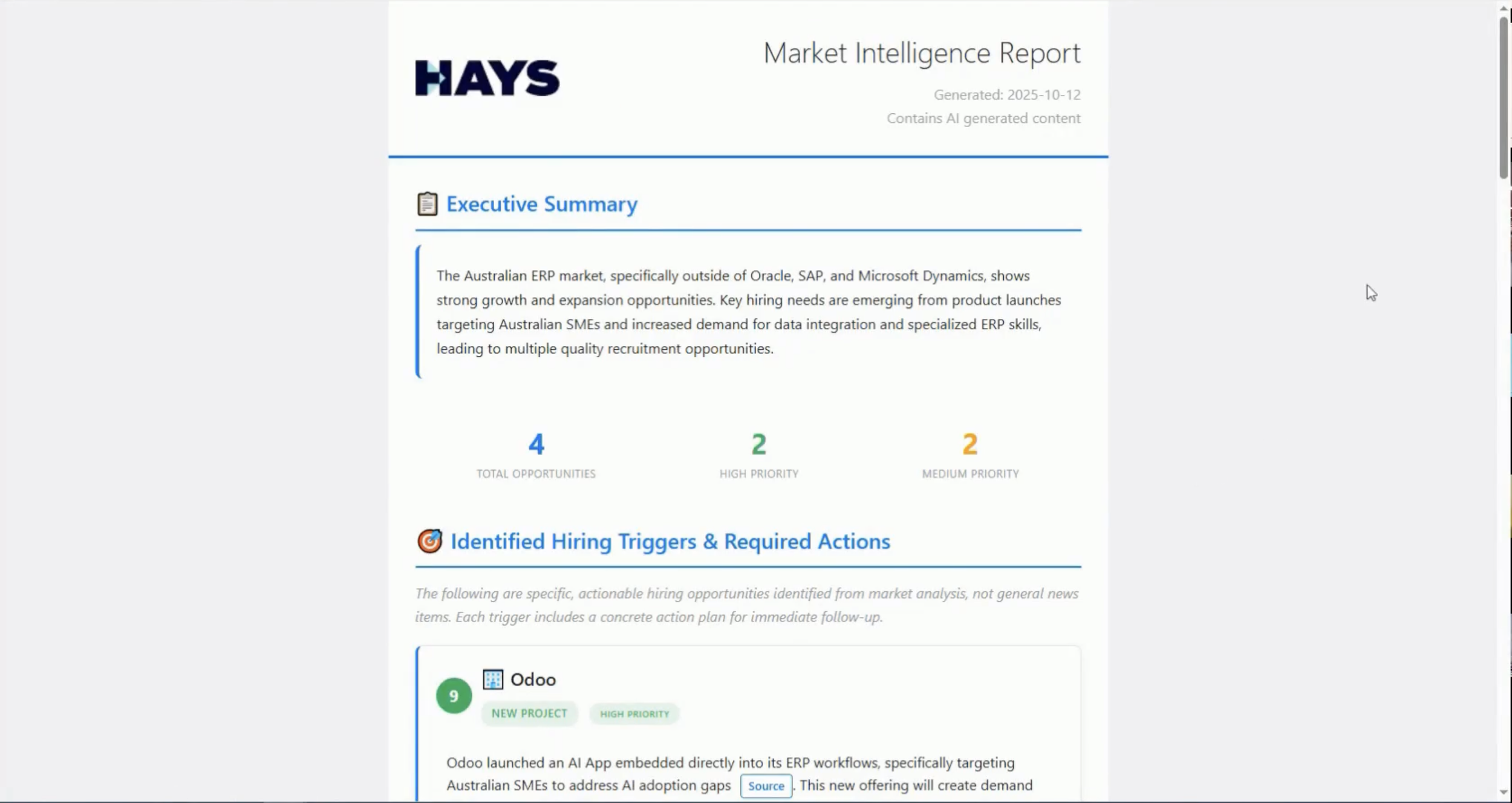
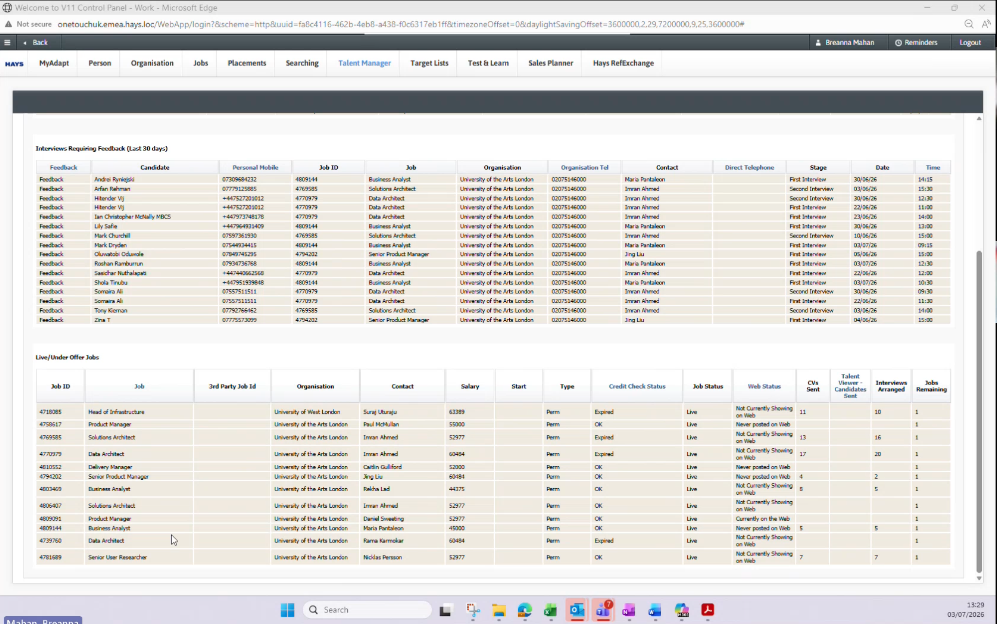
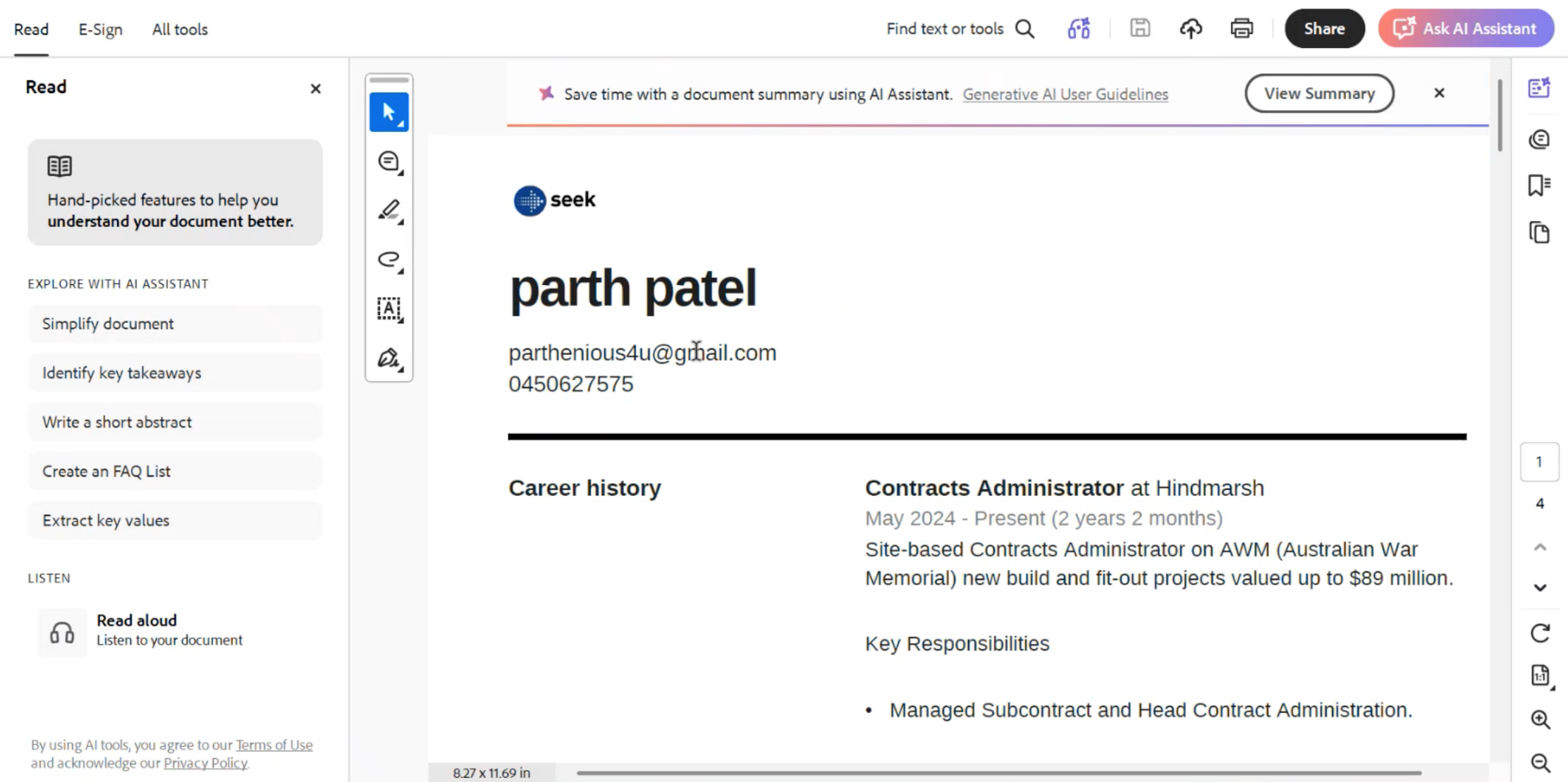
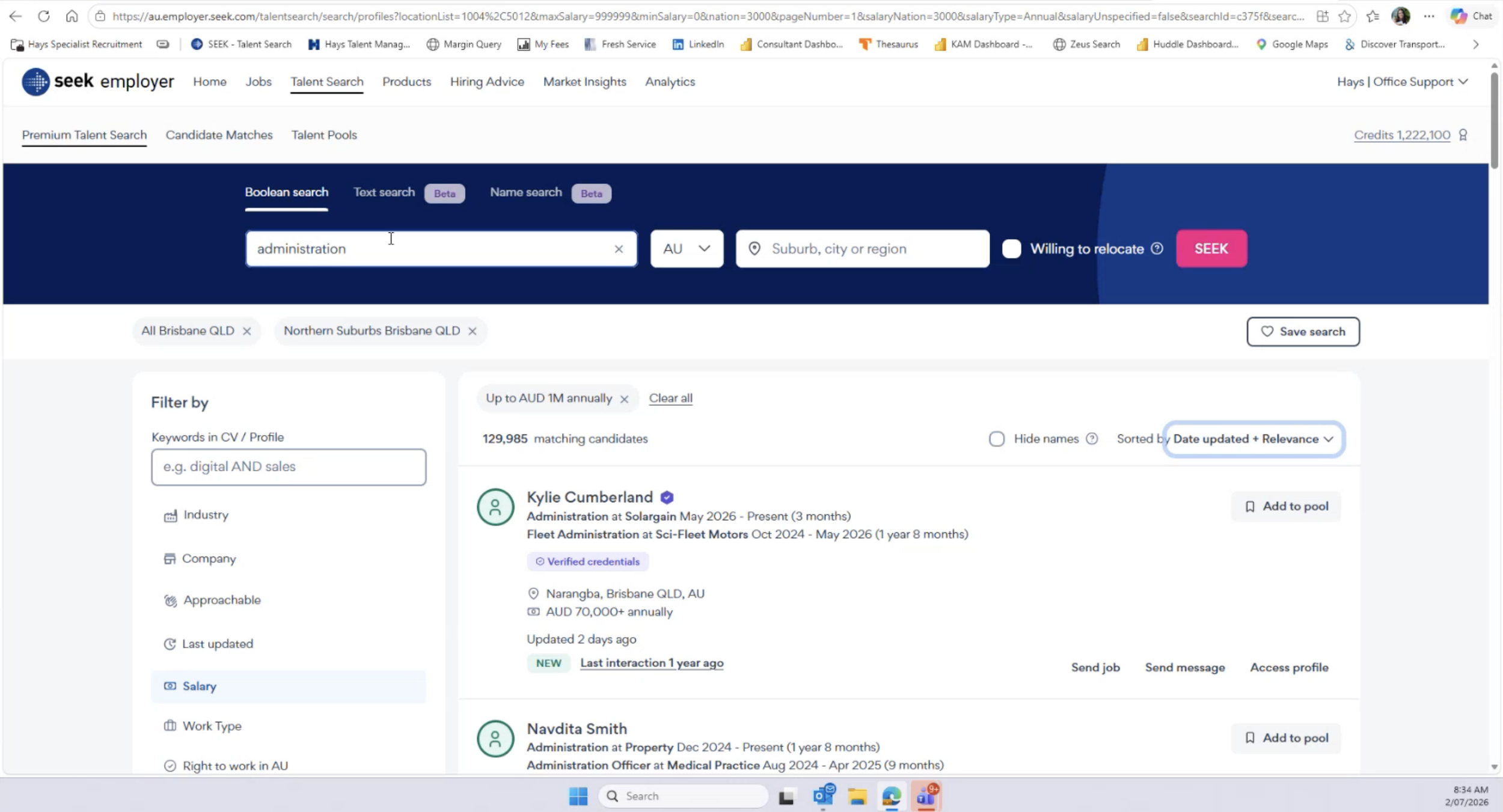
Designed a unified Workspace surfacing two AI agents within a three-week timeframe.
After
The bigger picture
From candidate discovery to business development
Together, the Workspace, Search & Match and Market Insights create a connected foundation for AI-supported recruitment. They help recruiters across the UK/Europe, German-speaking markets and Australia & New Zealand find potential candidates, understand market opportunities and move from information gathering to informed action, all within one consistent experience


Pain point
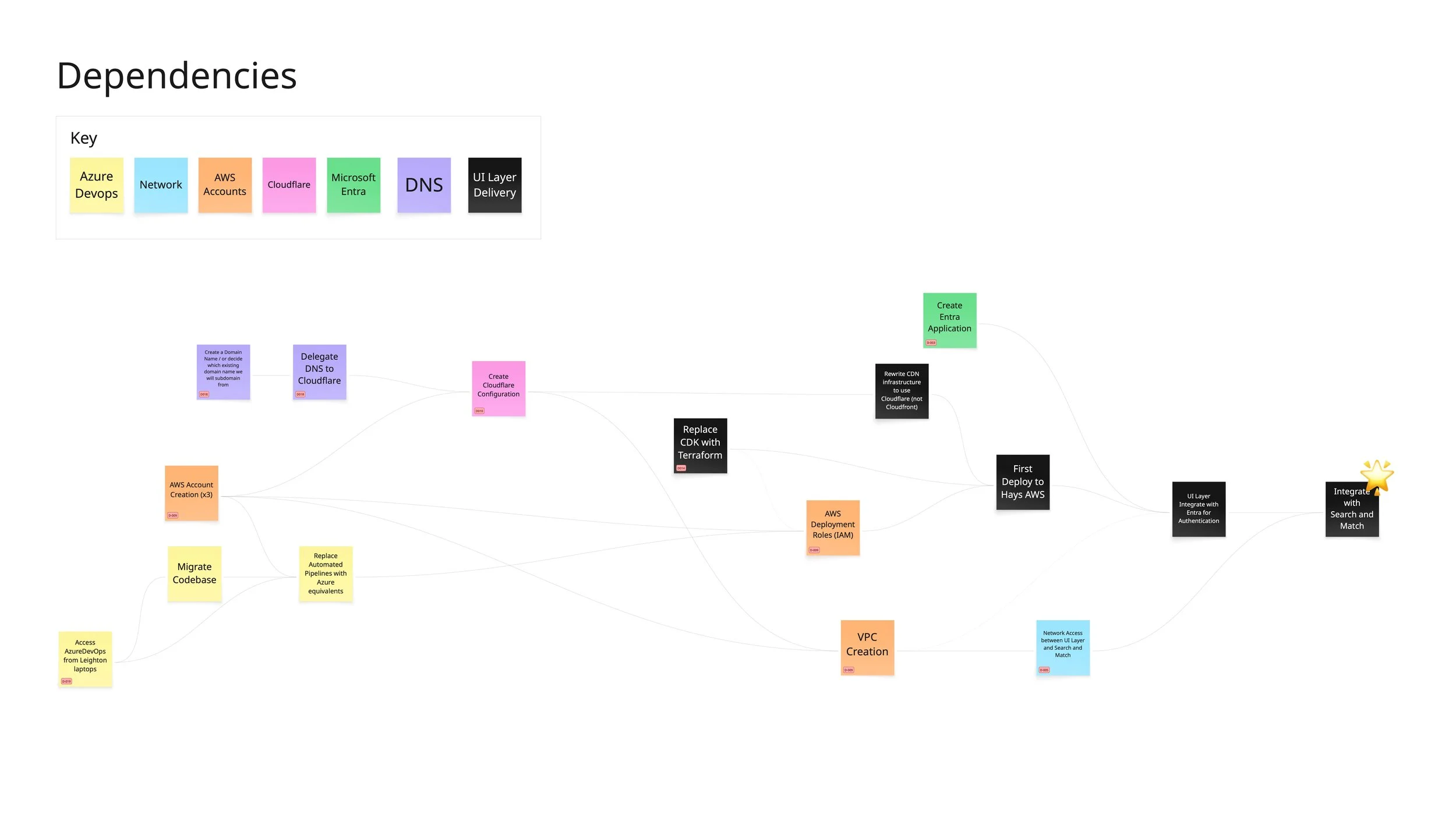
Recruiters across global markets relied on a fragmented ecosystem of platforms and tools.
Client challenged me to explore a unified AI-powered Workspace that could bring eight AI agents into a single experience within just three weeks.
Technical dependency map demonstrating the high complexity of bringing the project to life, done by Greg Farrow (Principal Cloud Engineer).
Workspace
A gateway to AI-powered recruitment
A reusable, extensible Workspace provides recruiters with a single entry point to AI-powered recruitment tools while creating a consistent experience.
Search & Match
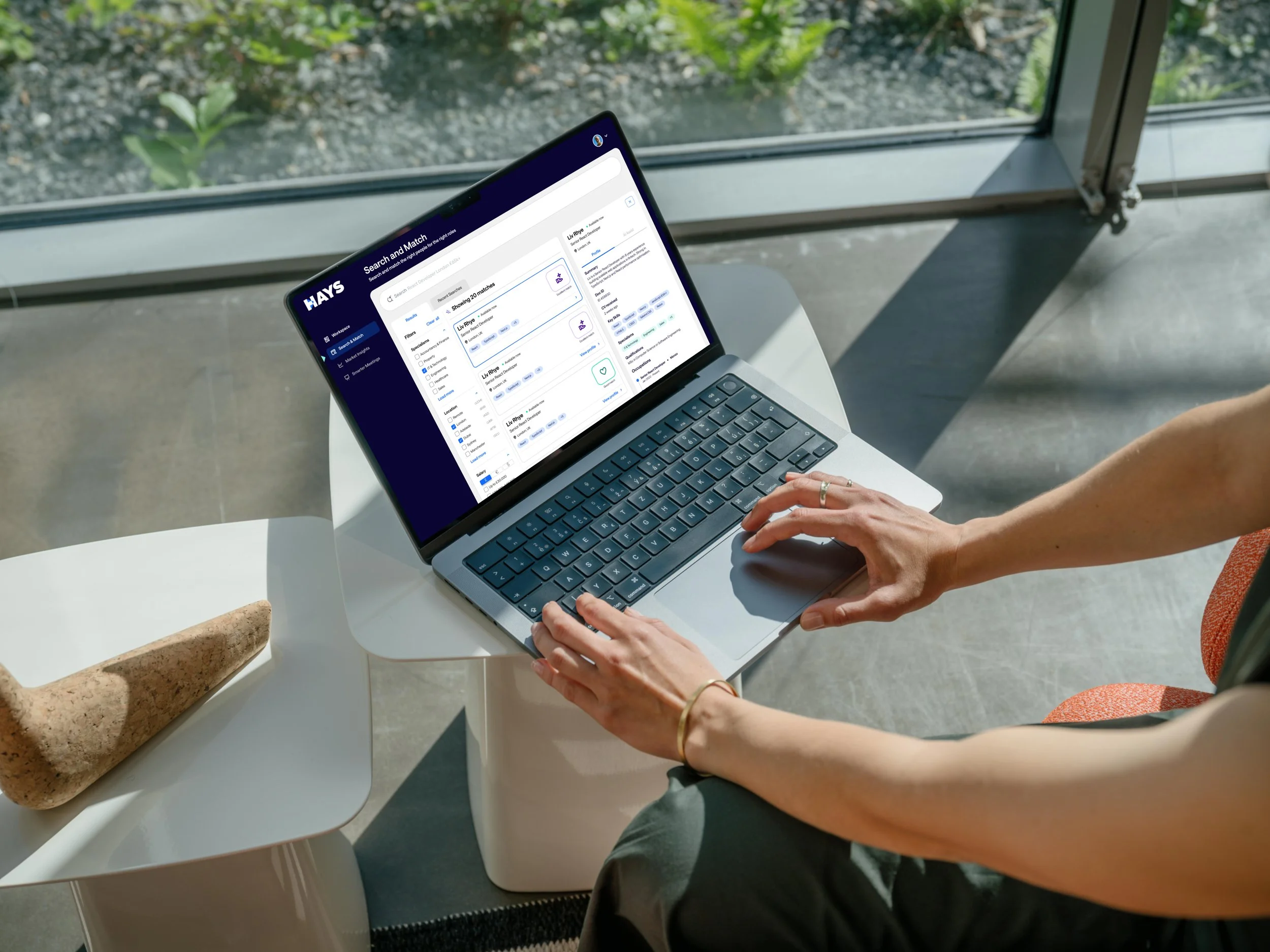
Finding the right candidates, faster
By simplifying candidate discovery and making search results easier to review, Search & Match aims to reduce manual effort, accelerate recruitment workflows and help users focus on relevant talent.
Market Insights
Turning market news into business opportunities
By reducing manual research, it encourages proactive client engagement and helps recruiters uncover business development opportunities and drive growth
User journey mapping & MVP prioritisation
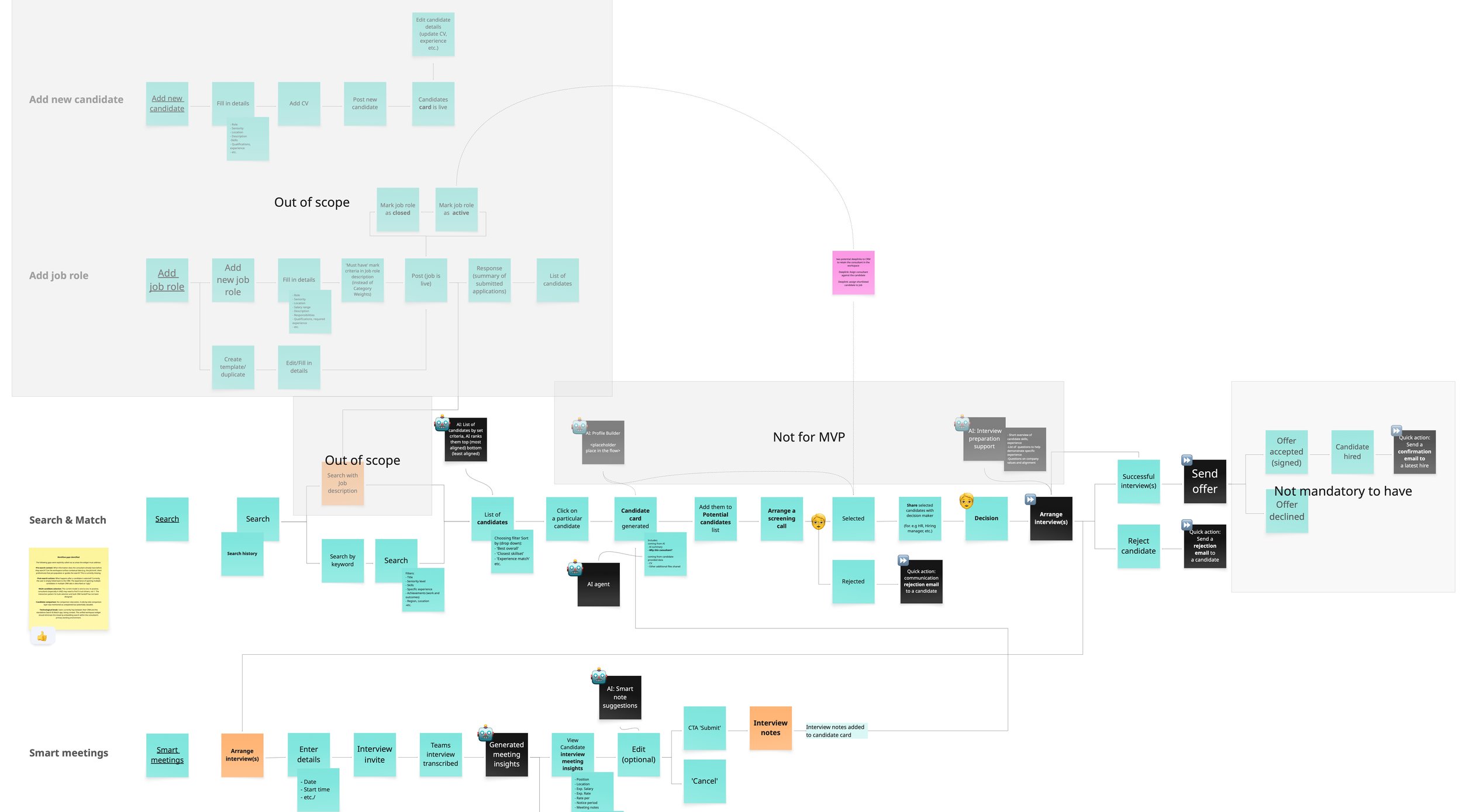
Mapped the end-to-end user journey to identify key pain points and opportunities. Prioritised improvements based on user needs and project constraints, defining the core features for the MVP and identifying opportunities for future iterations.
Decision
Prioritising for feasibility and future scale
With tight delivery timelines and unconfirmed technical dependencies across eight AI agents, delivering the full scope risked compromising feasibility.
Following discussions with internal and external product and technical stakeholders, I recommended prioritising the two agents (Search & Match and Market Insights) with the clearest path to API integration.
This established a focused, achievable initial scope while creating a scalable workspace designed to accommodate the remaining six AI agents as they become ready for launch.
Candidate Profile Enrichment
Candidate Screening
Job builder
Smarter Meetings
Automated communication
Rebooking
Search & Match
Market Insights

Search & Match
Market Insights
Search & Match
Recruiter Workspace
Market Insights
The focus:
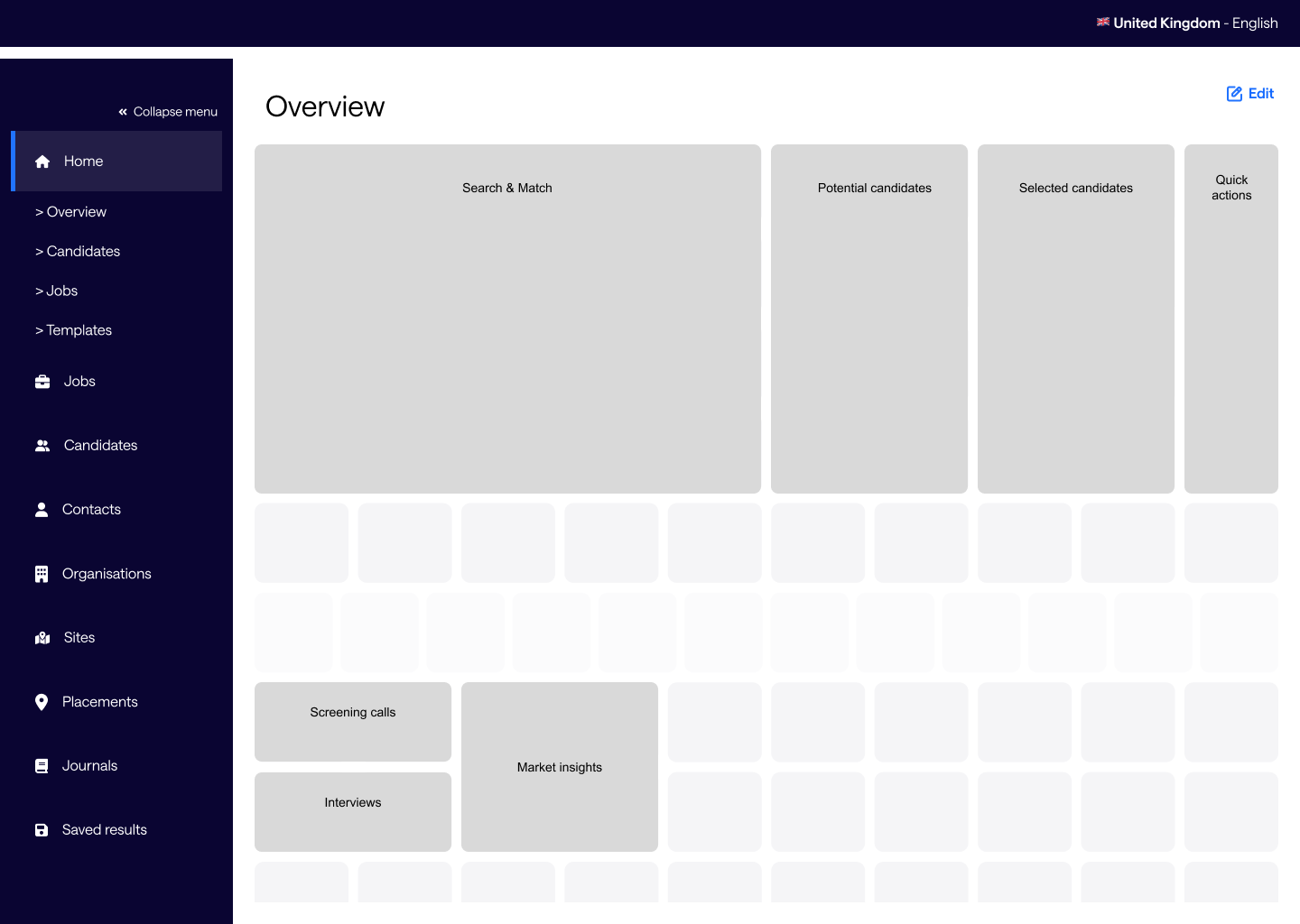
Unified Workspace- a central entry point to AI capabilities through modular widgets.
AI agents Search & Match- supporting candidate discovery and matching.
AI agent Market Insights- surfacing market intelligence to inform recruitment decisions.
Initial concept & design approach
Responsiveness
The key to the platform’s success was ensuring it remained responsive and flexible, adapting to the device it was viewed on, whether desktop or mobile.
Personalisation
Each user can personalise their workspace to suit their needs and working style by selecting the most relevant widgets. This ensures a unified platform experience for recruiters across the UK/Europe, German-speaking, Australia & New Zealand markets, while still allowing for individual preferences.
Structure
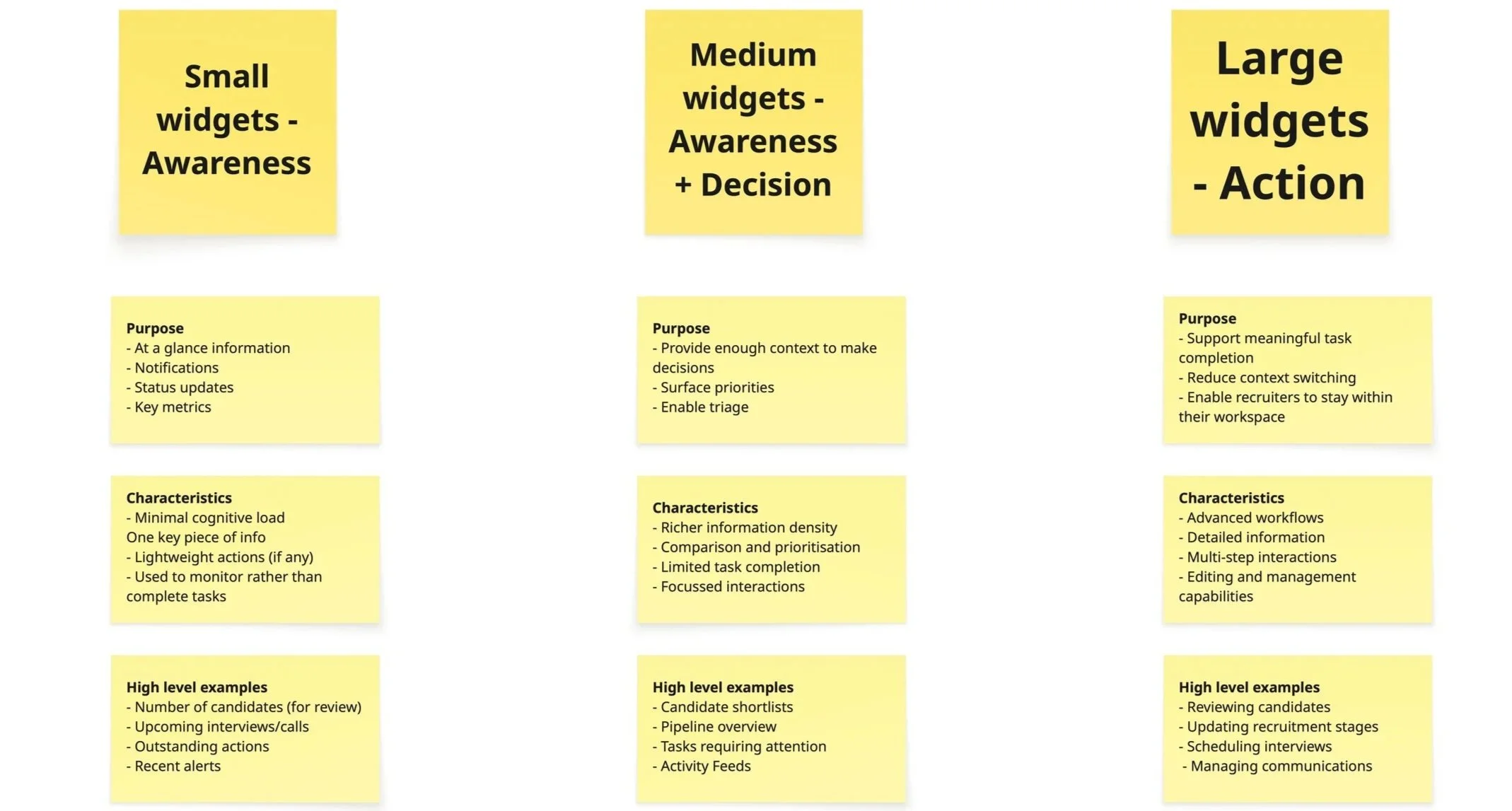
Progressive disclosure ensures users see the right information at the right level of detail and at the right time. Smaller widgets provide key signals, while larger widgets offer more context and expanded views support action.
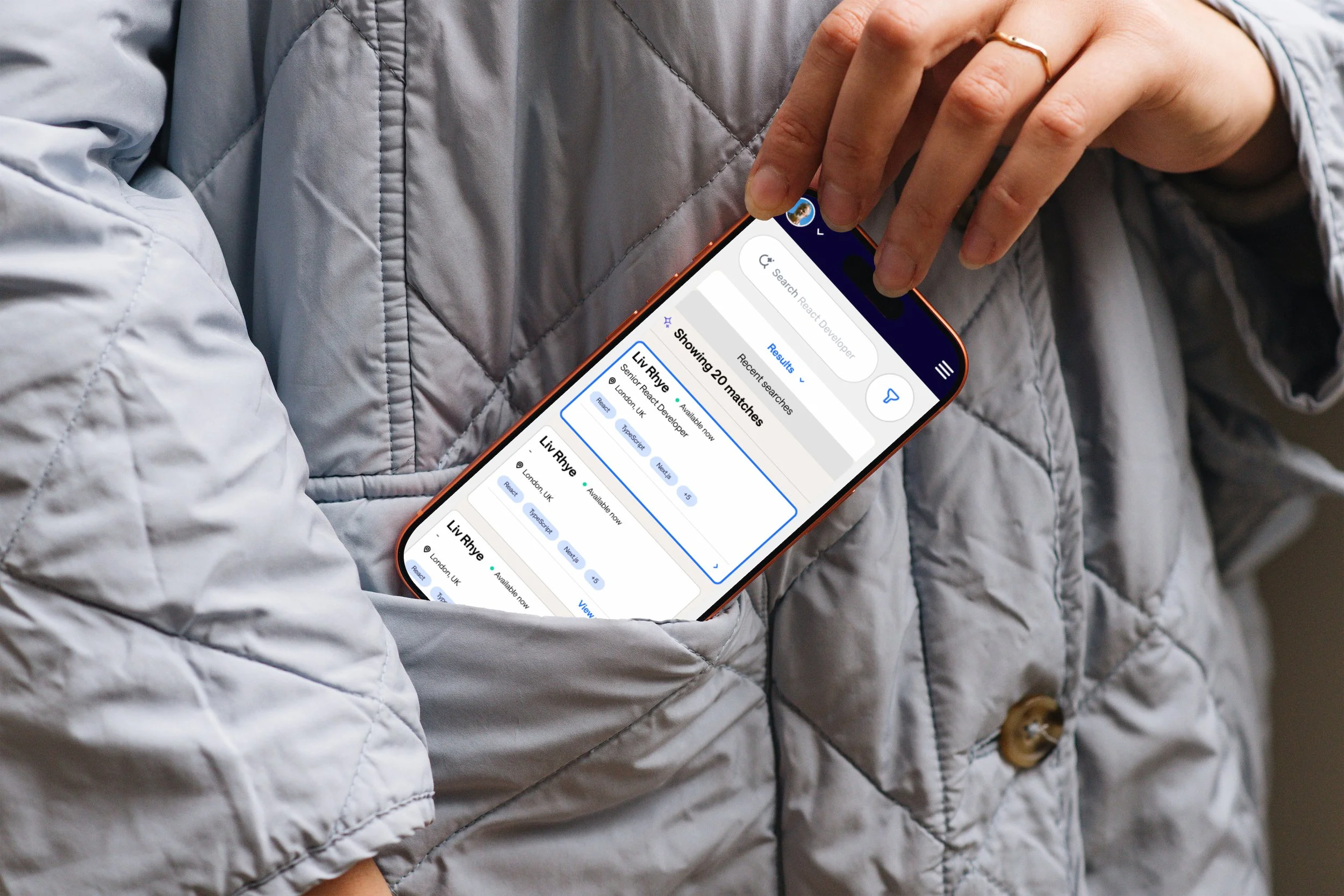
Web responsive design
Creating a seamless experience across web and mobile through responsive design system components that adapt across devices. This allows recruiters to use the platform in a way that suits their needs, whether they are working in the office or on the go.
Progressive disclosure: Small widgets communicate awareness, medium widgets support awareness and decision-making, large widgets enable action.
Balancing delivery constraints with product vision
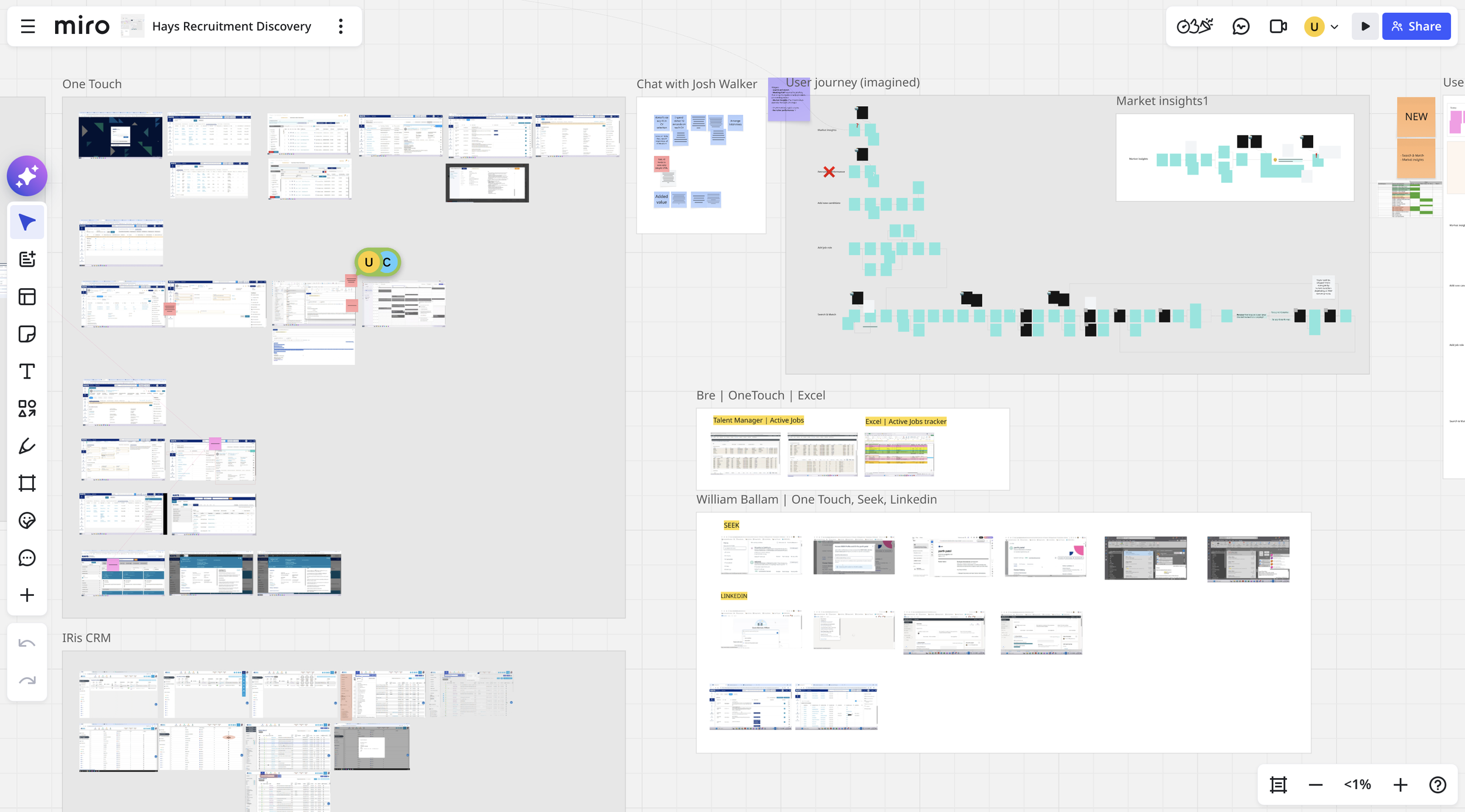
Future iterations were explored in parallel with delivery.
I contributed to ideation for a feasible platform design aligned with the three week delivery timeline and a scalable, API supported design, while exploring possible future directions and the wider potential of the product.
Conceptual prototype exploring post-delivery enhancements, designed by Daniel Summerill (UX Lead).
Key takeaway
Don’t tell them. Show them.
Understanding context and exploring possible different user journeys before designing.
Recruiter Workspace
A reusable, extensible Workspace that acts as a gateway to AI agents, giving recruiters a single entry point to AI-powered recruitment tools through a consistent, connected interface.
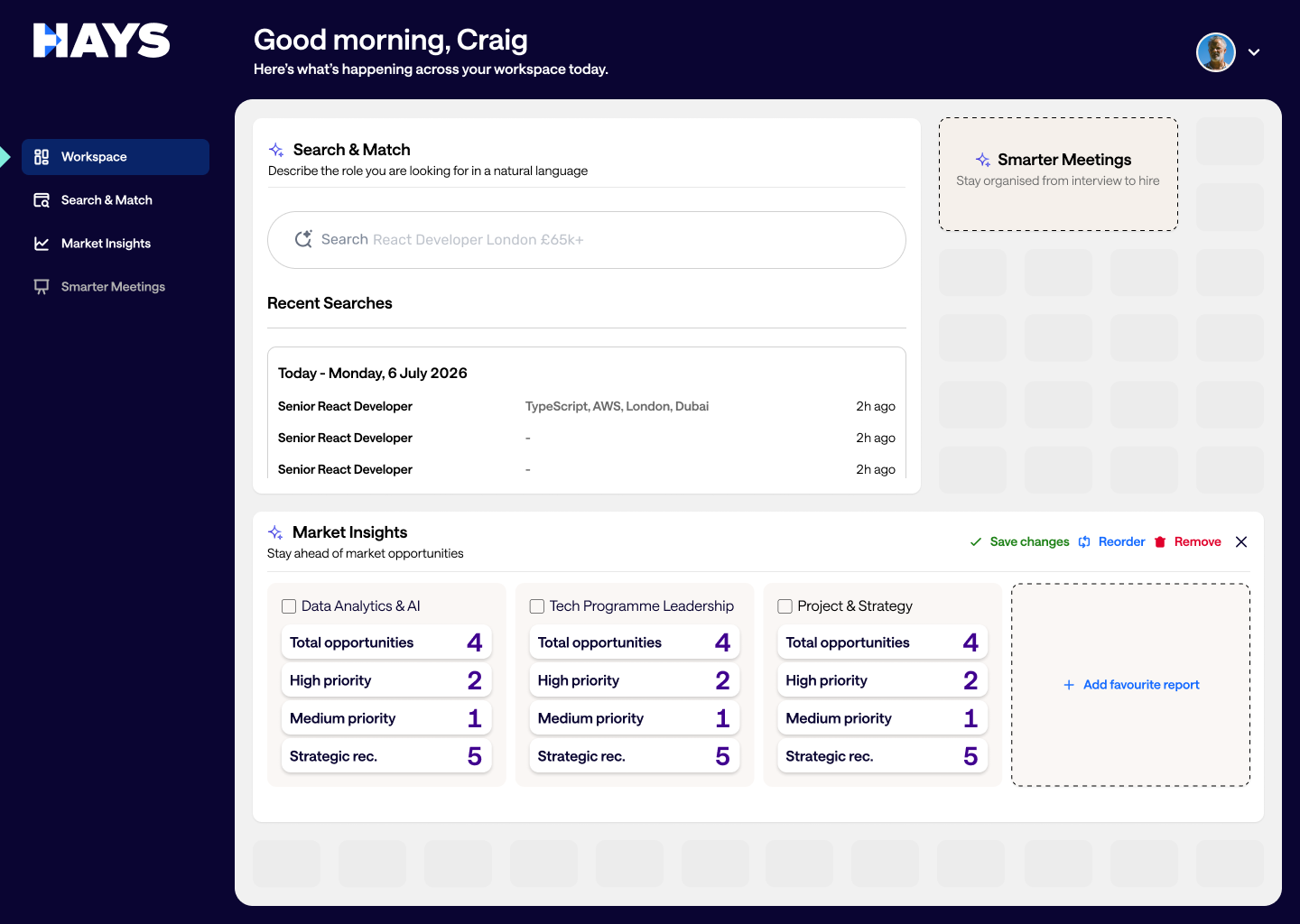
use side navigation or click directly on a widget to access a specific AI agent
Search & Match
2. View generated report →
Final designs
grid stack approach for customisable workspace
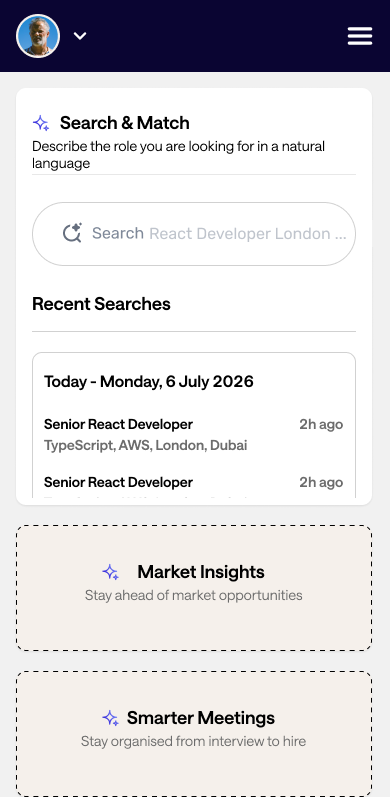
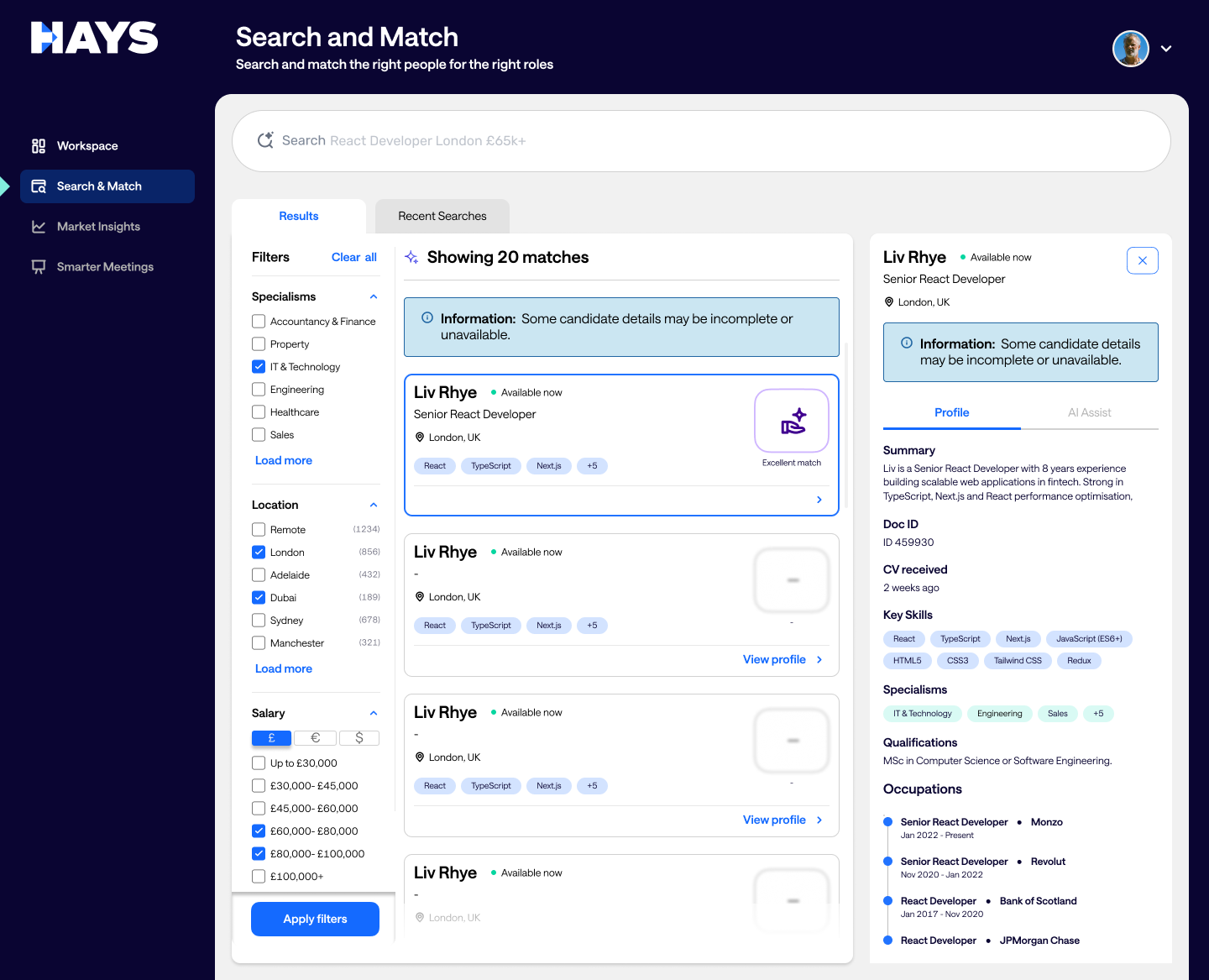
Enables recruiters to discover suitable candidates through natural language searches, refine results and revisit recent searches through a streamlined, intuitive experience.
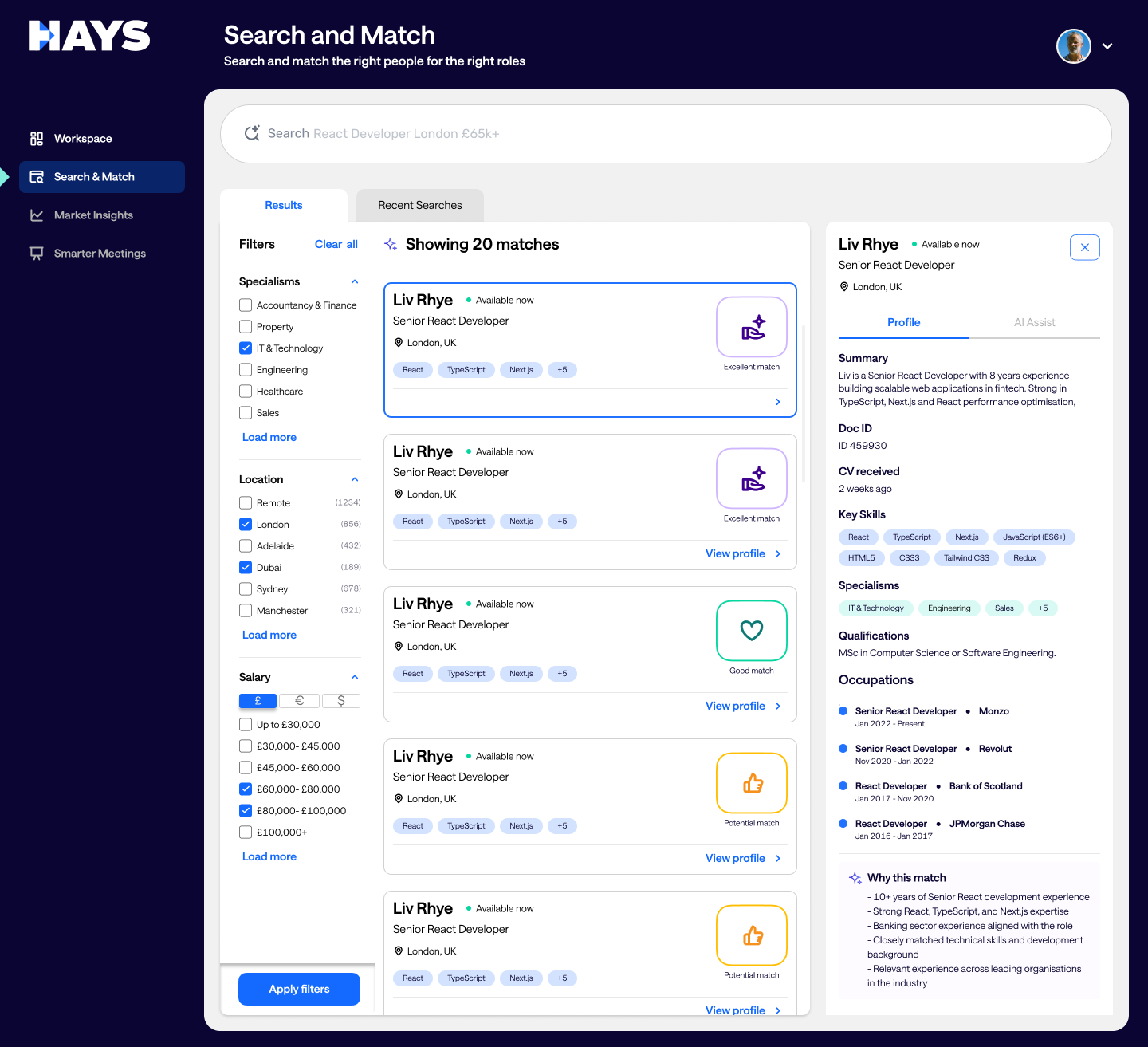
filters to adjust search results
Market Insights

Helps recruiters stay informed about their target markets through tailored, AI-generated reports that reduce manual research and uncover new business development opportunities.
1. Add configuration→
placeholder for future AI agent ‘Smarter Meetings‘

‘Why this match?’ short summary why AI engine has recognised this candidate as an ‘Excellent match’
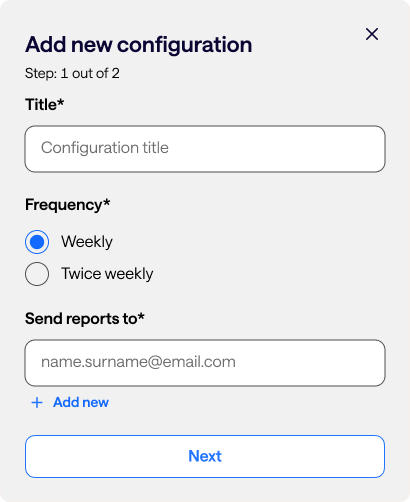
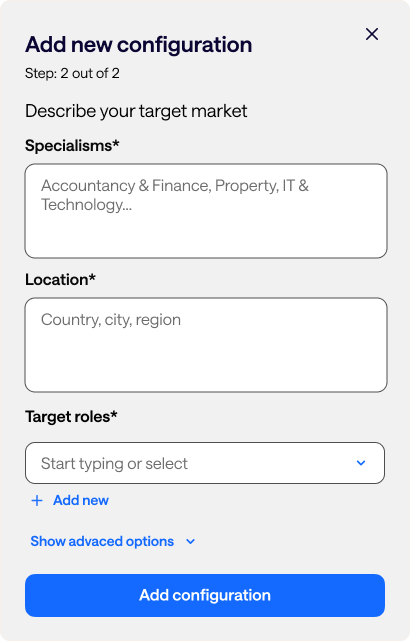
personalise ‘Market Insight’ widget by adding your favourite report summary for quick access
search results are grouped into 3 categories based on candidate suitability:
‘Excellent match‘,
‘Good match‘,
‘Potential match‘
collapsable side panel providing with further candidate information
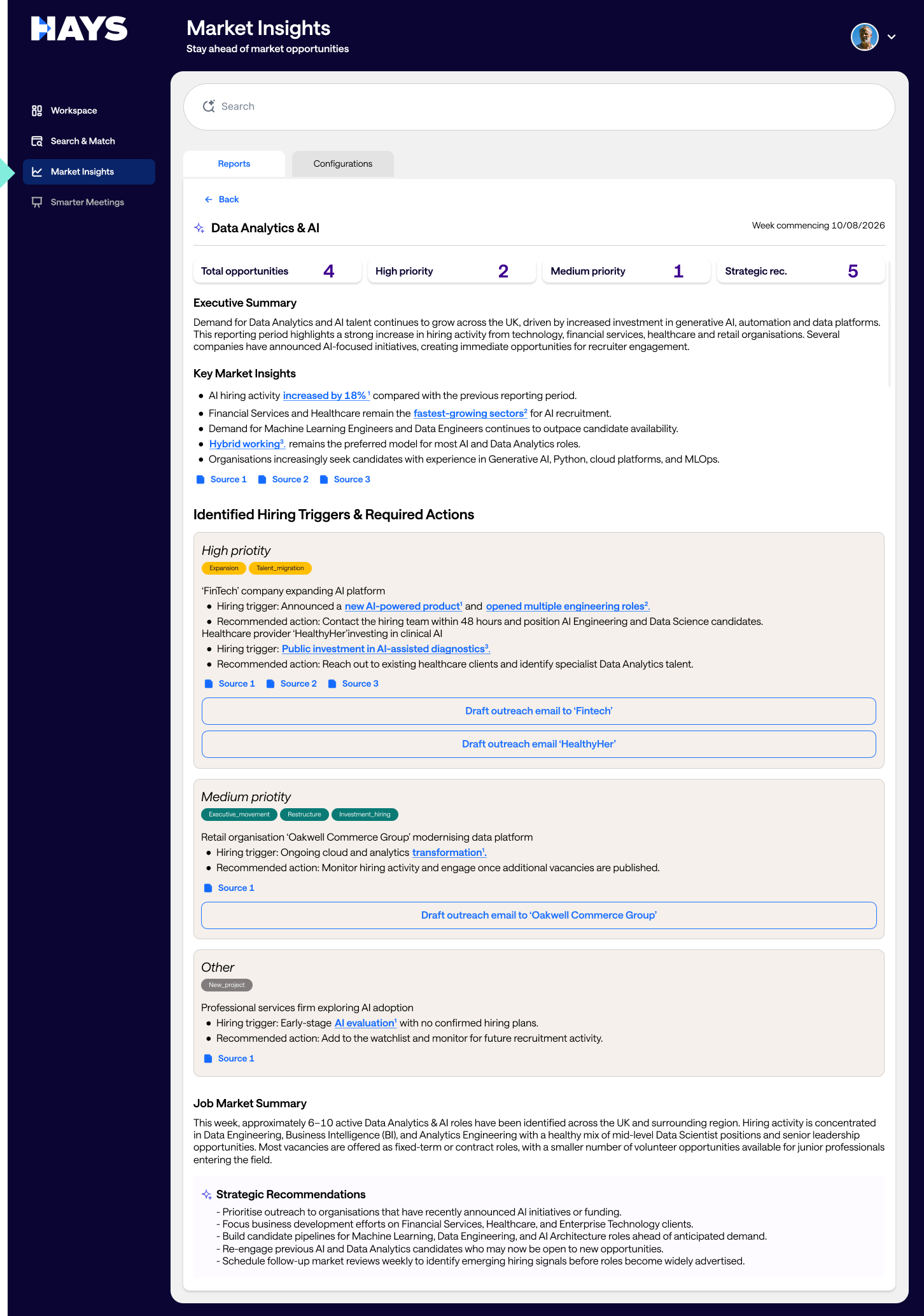
Designed for effortless scan through, with hiring triggers categorised by priority:
high
medium priority
other
‘Data Analytics & AI‘ report summary
click ‘Draft outreach email‘ to send a ready template via Outlook
AI created ‘Strategic Recommendations‘ on next steps
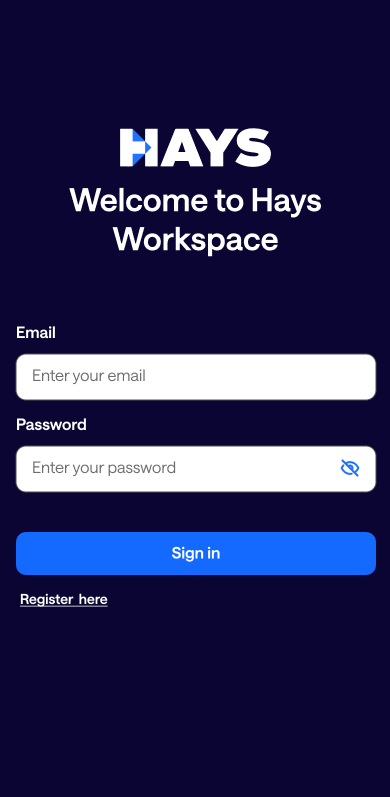
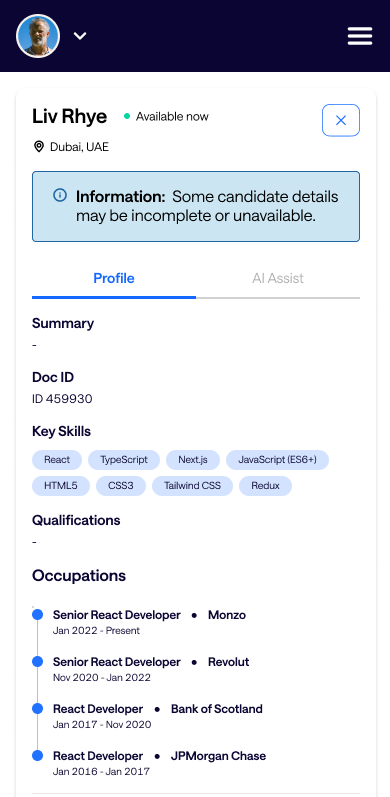
Web responsive designs for mobile device.

Decision
Designing for clarity within data constraints
Challenge:
Because the Search & Match API is the primary source of candidate information, the interface had to balance usability with data limitations.
Data limitations:
Incomplete candidate profiles
Some candidate cards were missing information, therefore, making it relatively sparse in the frontend.Inconsistent match scoring logic
Match scores logic and rules were under development and in testing at the time the designs were made. Since there was no unified score system (meaning some scores are 100 maximum, other 250) I decided to categorise the displayed information into 3 categories: ‘Excellent/Good/Potential’ match which would help recruiter determine how suggested candidates are ranked (the most suitable candidate(s) shown at the top).
Prioritisation:
In terms of design my decision was to prioritise clarity, hierarchy, showing realistic supported data and AI agents, predictable interactions and appropriate handling of unavailable information rather than adding features to make the experience appear more complete.
Key takeaway
Design can do more than deliver an interface. It can help a business make informed decisions and avoid committing to a product before its feasibility and wider implications are fully understood.
Impact
The realistic product experience gave the client the evidence needed to make a critical strategic decision: not to proceed with a launch.
By making (earlier in the project raised) technical, organisational and cross-functional complexities tangible, the design and engineering work exposed key risks and gave stakeholders greater visibility into the dependencies involved.
The detailed proposition (ready to go live product with mapped out dependencies and risks) enabled the client to reassess the product’s feasibility, required resources and underlying technical infrastructure before committing to further investment.
The findings also informed the next phase of strategic planning, shaping the future direction of the platform’s design and technical architecture.